

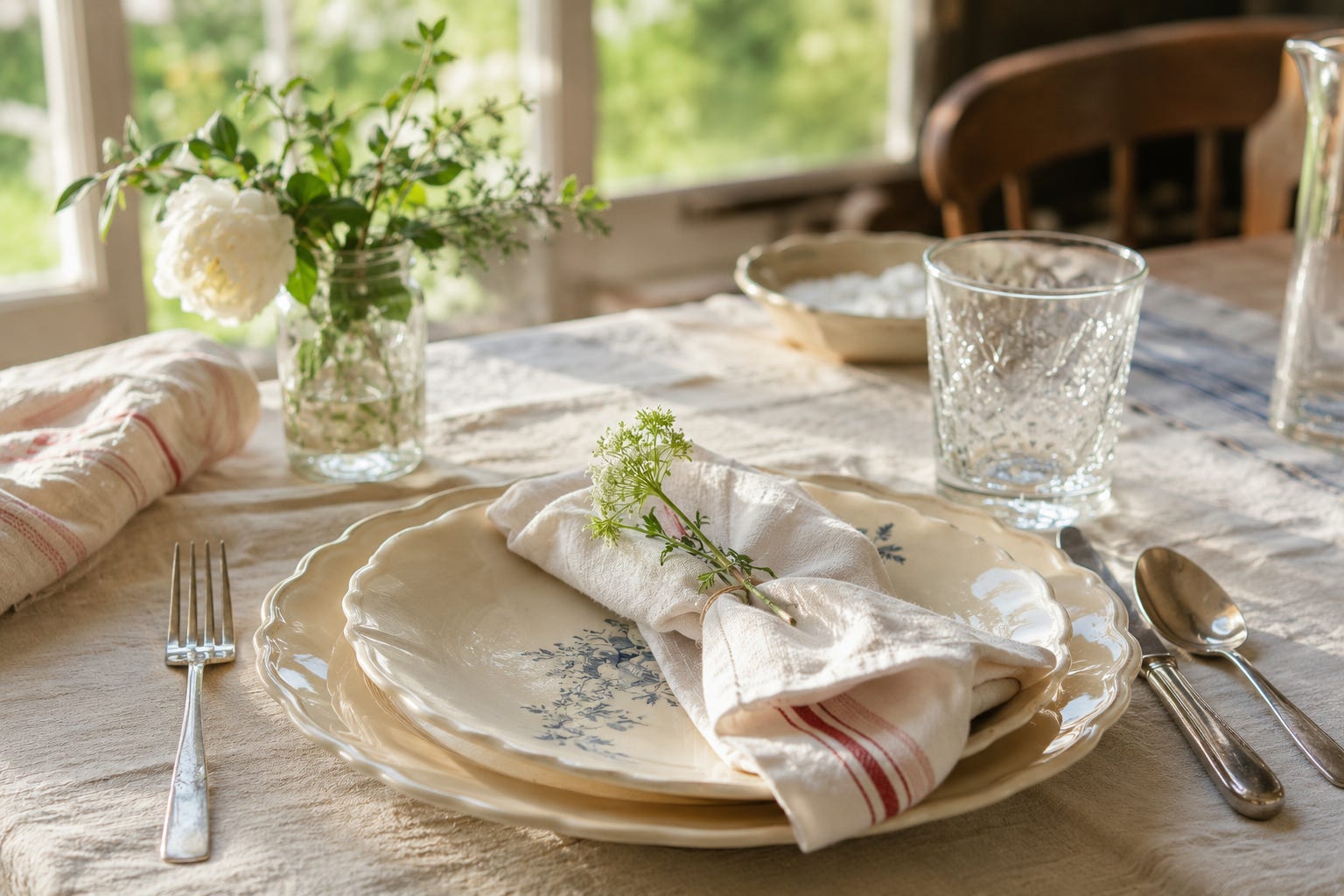
Before anyone lifts a fork, they’ve already decided how hungry they are.
That’s not a theory. That’s just how a plate works.
I’ve been thinking about this for years without having a name for it — the way a meal arranged with care tastes like care before a single bite is taken. The way color and light and the simple act of wiping the rim of a serving bowl changes the feeling of sitting down. We eat first with our eyes. Everything else comes after.
I learned this, I think, from two completely opposite places.
The first was my mother’s breakfront. You know the one — every household of a certain era had it. Dark wood, glass doors, the good china stored behind them for so long that each plate had to be washed before the table could be set. It only came out for holidays. Easter. Thanksgiving. Christmas. The rest of the year it stood there in the dining room like a monument to occasions that hadn’t arrived yet.
I loved those holiday tables. The china, the pressed tablecloth, the good glasses. There was something in the ritual of it that said: this meal matters. These people matter.
But I’ve spent a long time thinking about what it means that the china spent most of its life in the dark. That beauty was something we rationed. Reserved. Saved for later.
I don’t believe in saving beauty for later anymore.
The second place I learned it was a backyard barbecue at my cousin’s house on an ordinary Saturday afternoon in summer. Nothing fancy. Red checked vinyl tablecloth, paper plates, plastic forks. Bountiful bowls of everything — Babs’ potato salad, coleslaw from a bag, macaroni salad, burgers and hot dogs cooked to order. Kids coming out of the pool dripping wet to claim their hot dogs. Marshmallows burned black over the fire because nobody could wait. No occasion. No reason. Just all of us together in the sun.
That table was beautiful. Not elegant — beautiful. The difference matters.
Because beauty isn’t about the china. It’s about the intention behind it.
I collect cookbooks the way some people collect novels — I read them cover to cover, study the photographs, linger over the plating notes. Over time I’ve been drawn less to the recipes themselves and more to the tables behind them. The way a cloth is folded. The way herbs are scattered. The way light falls on a bowl of tomatoes sitting in the right spot on the right afternoon.
And somewhere in all that looking, I developed a habit so automatic I barely notice it anymore: before anything goes to the table, I wipe the rims. Every platter, every bowl, every serving dish. Clean edges. A final check. It takes thirty seconds and it changes everything about how a table reads — not because anyone will notice, but because I will know.
That’s the thing about presentation that people miss. It isn’t for the applause. It’s a form of care made visible. A beautiful plate — even a paper one at a backyard barbecue, even a chipped one from Tuesday night dinner — tells the person sitting down something they might not be able to name but will absolutely feel: you were worth the effort.
My mother’s china is out of the breakfront now. I use it more than she did.
Not because the occasions got more special.
Because I stopped waiting for them.
— The Jersey Nonna